
Beauty Brands
Launch spooky makeup palettes and glow-in-the-dark collections.
Last Updated on October 13, 2026 by Kelina Chakma
Halloween is no longer just a one-day promotion. For businesses, it can be a month-long opportunity to attract customers, boost engagement, promote seasonal products, and maximize the Halloween shopping season.
The opportunity is substantial. Consumer spending on Halloween is expected to reach $13.5 billion this year, and 49% of consumers say they started shopping in September or earlier. This shows why getting your promotions in front of shoppers early can make a difference.
Instead of waiting until the last few days, businesses can plan early, build interest gradually, ramp up promotions as Halloween approaches, and use the final days to capture last-minute shoppers.
Whether you sell costumes, beauty products, home décor, food, pet products, or digital products, these Halloween marketing strategies for 2026 can help you turn the season into a structured campaign rather than a last-minute sale.
Unlike holidays tied to strict traditions, Halloween has no fixed script. That flexibility makes it one of the most adaptable retail moments of the year; nearly any category can find an angle:
Launch spooky makeup palettes and glow-in-the-dark collections.
Run costume contests. Pet costume spending alone hit over $860M.
Run “burn off the candy” challenges in early November.
Put a seasonal spin on product launches or content.
Strategic Timing : Halloween sits between back-to-school and the December rush, making it ideal for testing offers and creative before the stakes and ad costs rise for Black Friday.
The Real Challenge : Generic “spooktacular sale” banners and stock pumpkin graphics no longer cut it. With shoppers starting earlier and comparing more, brands need to personalize offers, drive participation rather than just purchases, and produce content people actually want to share.
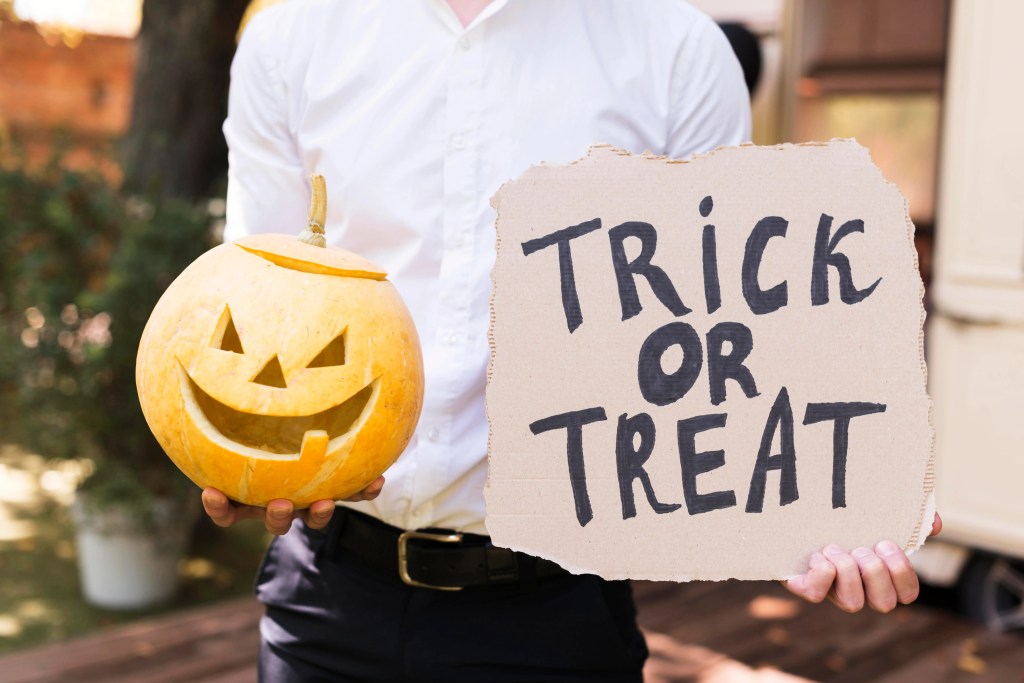
With half of shoppers buying before October even starts, "early" now means September, not the first week of October.
Begin execution in mid-August to early September:
Use early September for small tests of two subject line styles, a carousel ad versus a short-form video ad, so you're scaling proven creative by the time volume ramps up, not guessing.
For more practical campaign inspiration, explore these Halloween marketing ideas to help shape your seasonal strategy.
A strong pre-launch phase doesn't sell directly; it teases and invites your best customers into an inner circle, so the full campaign feels inevitable when it drops.
Layered teasers:
Gamified interaction: countdown timers, mystery reveals, or a poll guessing next season's design. These extend campaign lifespan by giving people a reason to screenshot and share before there's anything to buy.
Segment your offers, don't blanket them:
| Pre-launch Checklist | Purpose | Tools |
|---|---|---|
| Coming-soon banners | Spark curiosity | Homepage hero, social posts |
| VIP previews / early access | Reward loyalty, drive UGC | Email invites, private landing pages |
| Gamified countdowns & polls | Build interaction | Countdown timers, Instagram/TikTok polls |
| Segmented early access | Make offers feel tailored | Email/SMS segmentation, targeted bundles |
| Scarcity + social proof | Signal demand | "Only X left," waitlists, live view counts |
By mid-September, your teasers have done their job. This is where you claim the "go-to for Halloween" position before competitors fully wake up.
Seasonal, not generic, promotions. "Party starter kits" bundling candles, candy, and décor as an experience outsells a flat 20%-off banner bundling also lifts average order value.
Multi-channel synchronization on launch day:
Consistency across touchpoints is what makes recall stick. A shopper who sees the same campaign in three places in one day is far more likely to remember your brand as the Halloween source, not just a Halloween option.
Spotlight your bestsellers and limited editions everywhere landing pages, influencer content, paid ads. If you don't actively surface them, algorithmic feeds and search results will surface something else instead.
Launching mid-September gives you a 3–4 week runway to fill the funnel before the last-minute rush converts it.
Video is no longer a to-have. For Halloween, video is the format that carries the work. People remember more from video than from text. TikTok and Instagram are the leaders in Halloween inspiration and shopping research for people aged 18–34.
What changes in 2026: platforms have moved beyond simply posting a clip and hoping for the best. A few changes are worth adding to your plan:
You don’t need studio production. A clear hook, a real product, authentic UGC, or even a strong product image turned into an AI video can give you plenty of content to keep your Halloween campaign moving.
Email remains one of the most cost-effective marketing tools—and a reliable Halloween revenue engine. On average, email delivers roughly $36 in return for every $1 spent. The right email marketing app can make it easier to automate campaigns, manage customer segments, and turn that potential into a more effective Halloween marketing strategy.
Audience segmentation + personalization - Segment into meaningful cohorts (new subscribers, loyal customers, lapsed buyers, high-value repeat purchasers) and apply personalization—personalized emails drive far stronger behavior (studies show ~6× higher transaction rates for personalized sends).

Subject lines worth A/B testing:
Build a flow, not a single blast:
Add urgency mechanics: countdown timers, curated bundles like “Spooky Family Pack,” and delivery cutoffs can move shoppers to action faster than a discount alone.
Track what matters: Open rates and clicks mean little without revenue per send and conversion data by segment. Once an automated flow proves effective, scale it before creating something new.
Stripo’s Halloween case study shows a simple, gamified email—“Guess the Halloween Movie” (emoji-based) that included a charity donation for each completed game. The interactive email boosted engagement, drove downloads of Stripo’s gamification guide, and increased registrations for their Academy—demonstrating that accessible interactivity + purpose can lift engagement without relying on deep discounts.
Email checklist
Push cuts through inbox clutter and lands directly on a shopper's device, useful when Halloween's window is genuinely short.
Keep it brief and behavior-triggered:
Sequence pushes like a campaign, not a series of blasts: teaser → launch-day → personalized reminder → final "last chance" push.
And sync pushes with other channels if a shopper opens an email but doesn't click, a follow-up push closes the loop rather than duplicating the same message blindly.
Tip: Use humor sparingly — one spooky phrase is charming, too many feel gimmicky.
Halloween is inherently social costumes and décor are made to be shown off, making it easy to turn customers into co-creators rather than just buyers.
Consider a community angle beyond sales: donating to a cause or running a costume-recycling push can add goodwill beyond a discount code.
Run low-cost, high-impact contests: costume competitions, pumpkin-carving challenges, or “scariest décor setup” photo entries. A small incentive, like a gift card or homepage feature, can encourage authentic content and organic reach.
Lower the barrier to entry. A simple branded hashtag and one-line prompt (“Post your costume, tag us, win”) make participation easier.
Repurpose UGC everywhere: feature customer costumes and product photos in emails, landing pages, and social content to add authentic social proof.
Create more UGC-style content from your products. Tools like Outfy can turn store product images into UGC-style videos, making it easier to create Halloween content without filming every product. You can also automate posting across your connected social channels.
Halloween ends October 31, but the value of what you built shouldn’t. Brands that perform well during Black Friday and the holidays often use Halloween as the first step rather than a standalone event.
Retarget your warm audience immediately:
Bridge the transition instead of jumping straight into holiday mode:
Capture what worked while it’s fresh review email performance, clicks, UGC engagement, and other campaign results. Documenting these insights now gives you a stronger playbook for next year.

Repurpose Halloween assets for the holidays: Turn UGC into festive email content, swap spooky props for cozy ones, and refresh existing photos with new backdrops and copy instead of starting from scratch.
Video brings Halloween campaigns to life through visuals, sound, and storytelling. Consumers retain 95% of a message when watching it in a video, compared with just 10% when reading it in text.
Use short teasers before launch, product and UGC videos during the campaign, and highlight reels or thank-you videos afterward.
Key takeaway: You don’t need expensive production. A strong hook, engaging visuals, UGC, and consistent posting can make video a powerful part of your Halloween campaign.
Creating fresh Halloween content for every social platform can take a lot of time. Outfy makes it easier to create eye-catching promotional content from your existing products and automatically share it across your social channels.

With Outfy, you can:
Step 1. Go to Promotions in your Outfy dashboard and select a Halloween-themed template.
Step 2. Choose whether to promote your entire store, a product category, or specific products.
Step 3. Add your promotion text, coupon code, logo, and captions.
Step 4. Set your schedule and social networks.
Step 5. Click Create Promotion to generate and schedule your Halloween posts.
This helps you keep your Halloween campaign visually consistent and active across social media without creating every promotional post manually.
Halloween marketing works best when it is treated as a campaign, not a one-day promotion. Starting early gives you time to build anticipation, test your messaging, create engaging content, and reach shoppers before the final rush.
From short-form video and email campaigns to UGC, personalized offers, and social media automation, there are plenty of ways to keep customers engaged throughout the season. The key is to choose strategies that fit your audience, stay consistent across channels, and use your campaign results to improve future promotions.
With the right planning, Halloween can do more than drive seasonal sales. It can help you build stronger customer relationships, create reusable content, and carry momentum into the rest of the holiday shopping season.
Key takeaway: Don’t treat Halloween as a one-night gimmick. Treat it as a full-funnel growth engine—from pre-launch hype to post-holiday retention. Do it right, and your customers will keep coming back long after the pumpkins are gone.
1. When should businesses start Halloween marketing?
Businesses should start planning their Halloween campaigns several weeks before the season begins. Starting in August or early September gives you enough time to test creative, build anticipation, prepare landing pages, and launch promotions before competition increases.
2. What are the most effective Halloween marketing strategies?
Some effective strategies include short-form video, email marketing, UGC campaigns, social media contests, personalized offers, and early-access promotions. The right mix depends on your products, audience, and marketing channels.
3. How can small businesses market for Halloween on a limited budget?
Small businesses can focus on low-cost tactics such as organic social media content, UGC, email campaigns, product videos made from existing images, and customer contests. Repurposing the same content across multiple channels can also help maximize your marketing resources.
4. How can video help with Halloween marketing?
Video can make seasonal products more engaging and easier to discover. Businesses can use product demonstrations, UGC, behind-the-scenes clips, short-form videos, and AI-generated product videos to showcase Halloween products without requiring expensive production.
5. How can businesses keep customers engaged after Halloween?
After Halloween, businesses can retarget engaged shoppers with thank-you messages, early holiday previews, exclusive offers, and relevant follow-up content. Halloween campaign data and UGC can also be repurposed for upcoming holiday marketing campaigns.


Automated Viral Reels, Shorts, Videos, Stories, Promotions, Reviews. 5X more engagement and sales